

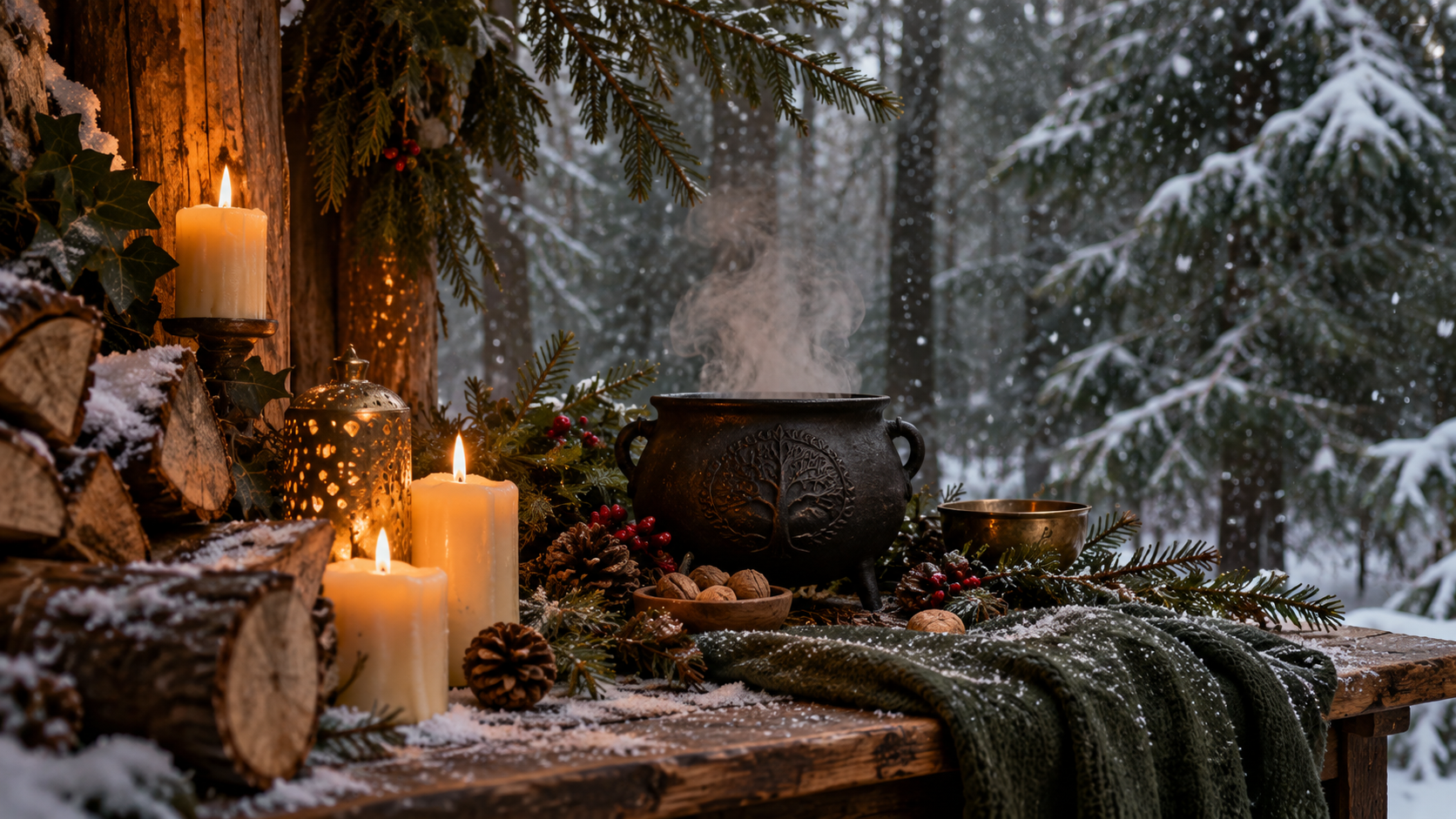
The Old Ways of Winter
Returning to the ancient rhythms of body, land, and hearth.
Welcome,
There is something about this winter that feels different to me.
Maybe it is because I have been digging deeper into my own Germanic roots, learning about the people who came before me and the ways they moved through the darkest months of the year. Maybe it is because I have been craving a deeper relationship with the seasons, the land and the natural rhythms we so easily lose touch with. Or maybe I am simply realizing how much wisdom there is in allowing winter to actually be winter.
Because while this season can be incredibly busy, underneath all of that noise, the Earth is doing something very different.
She is slowing down. She is conserving. She is drawing inward. She is resting.
And perhaps there is something here for us to remember.
The Old Ways of Winter is an invitation to experience this season a little differently.
Throughout this journey, I will be sharing pieces of old Norse and Germanic mythology, winter traditions and history that I have been exploring through my own ancestral roots. You do not need to share those roots to enter this space. These stories are simply one doorway through which we can become curious about the people who lived before us, reconnect with the natural world and remember something about our own relationship with winter.
There are two paths for you to explore here: The Winter Traditions and The Elemental Origins.
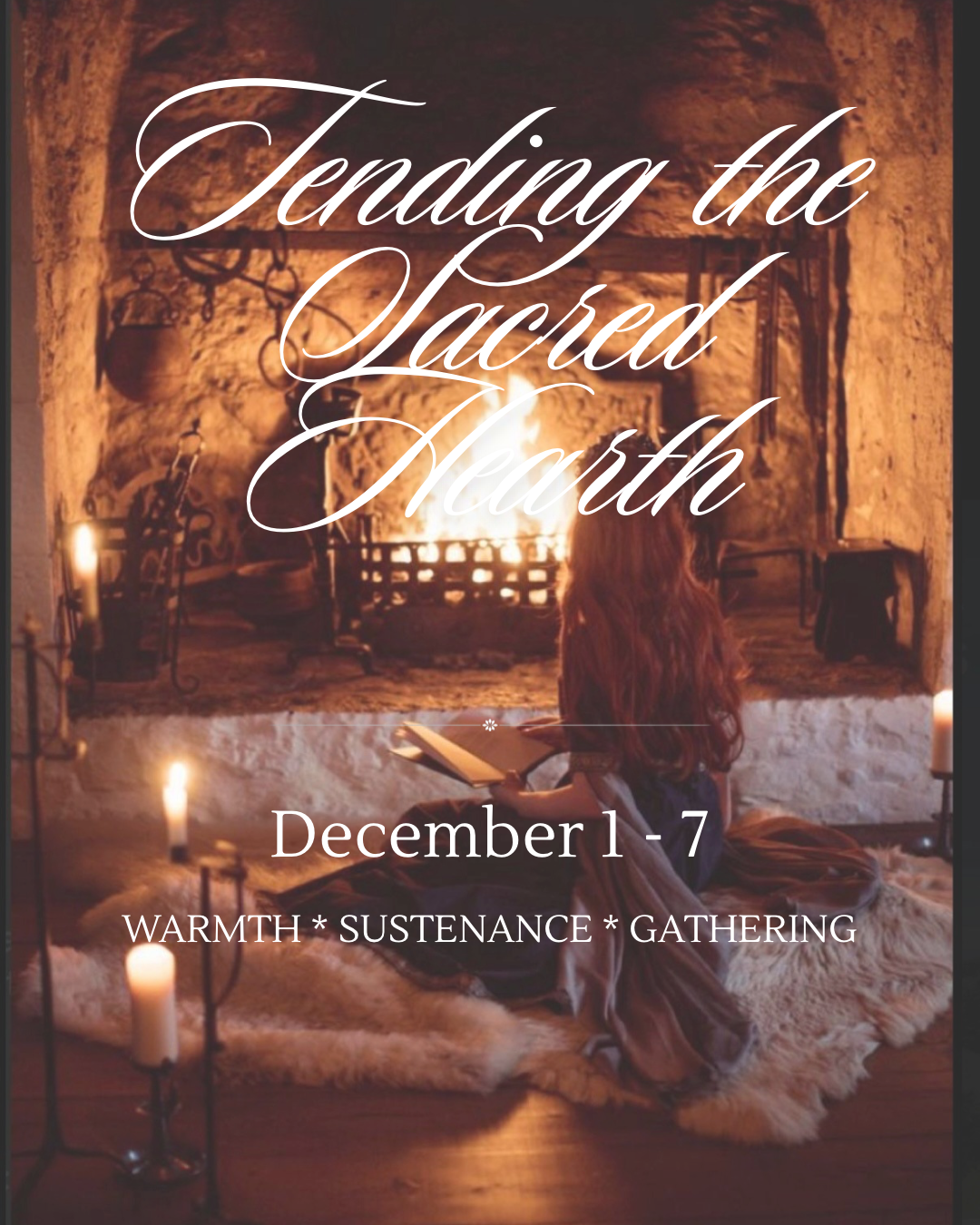
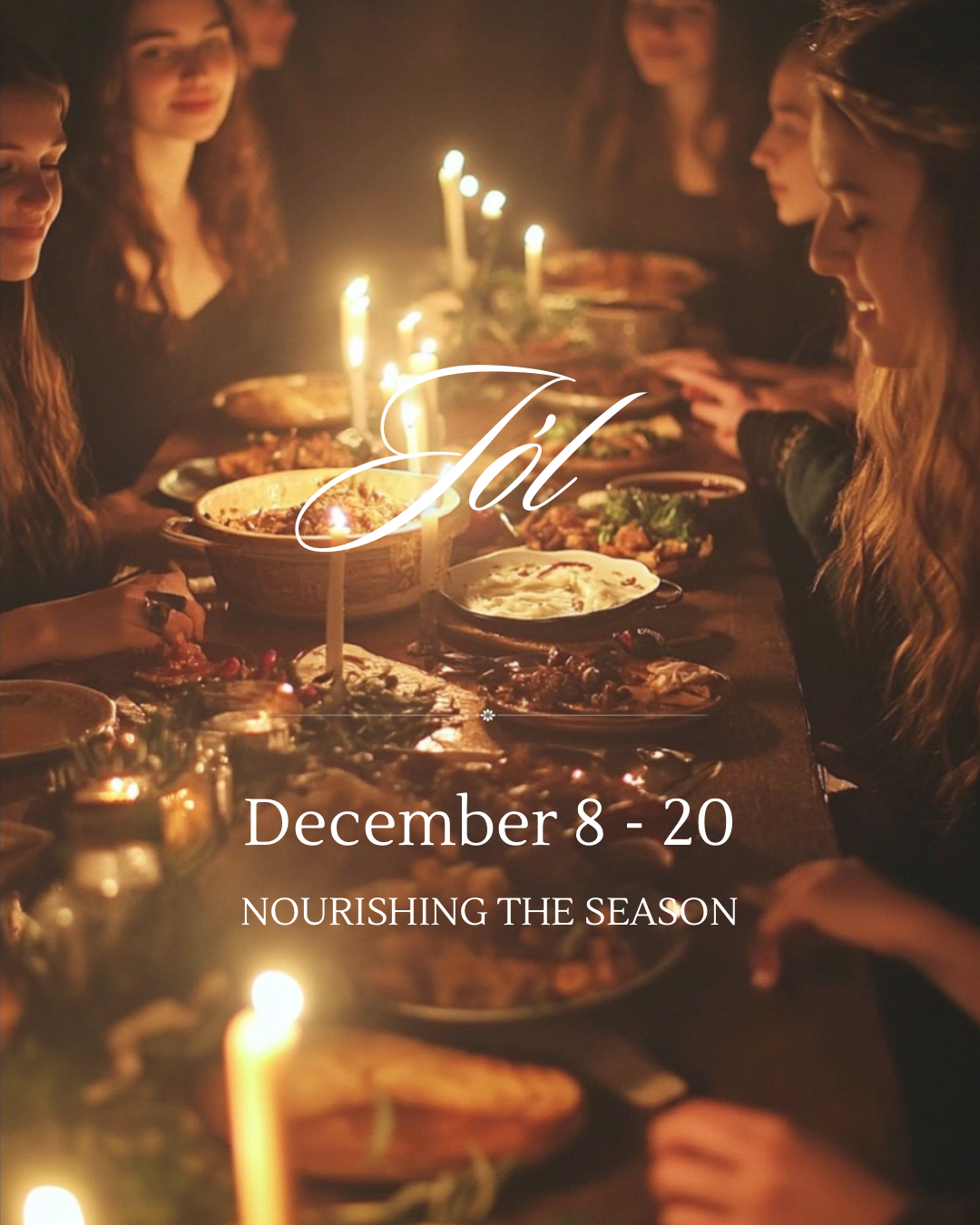
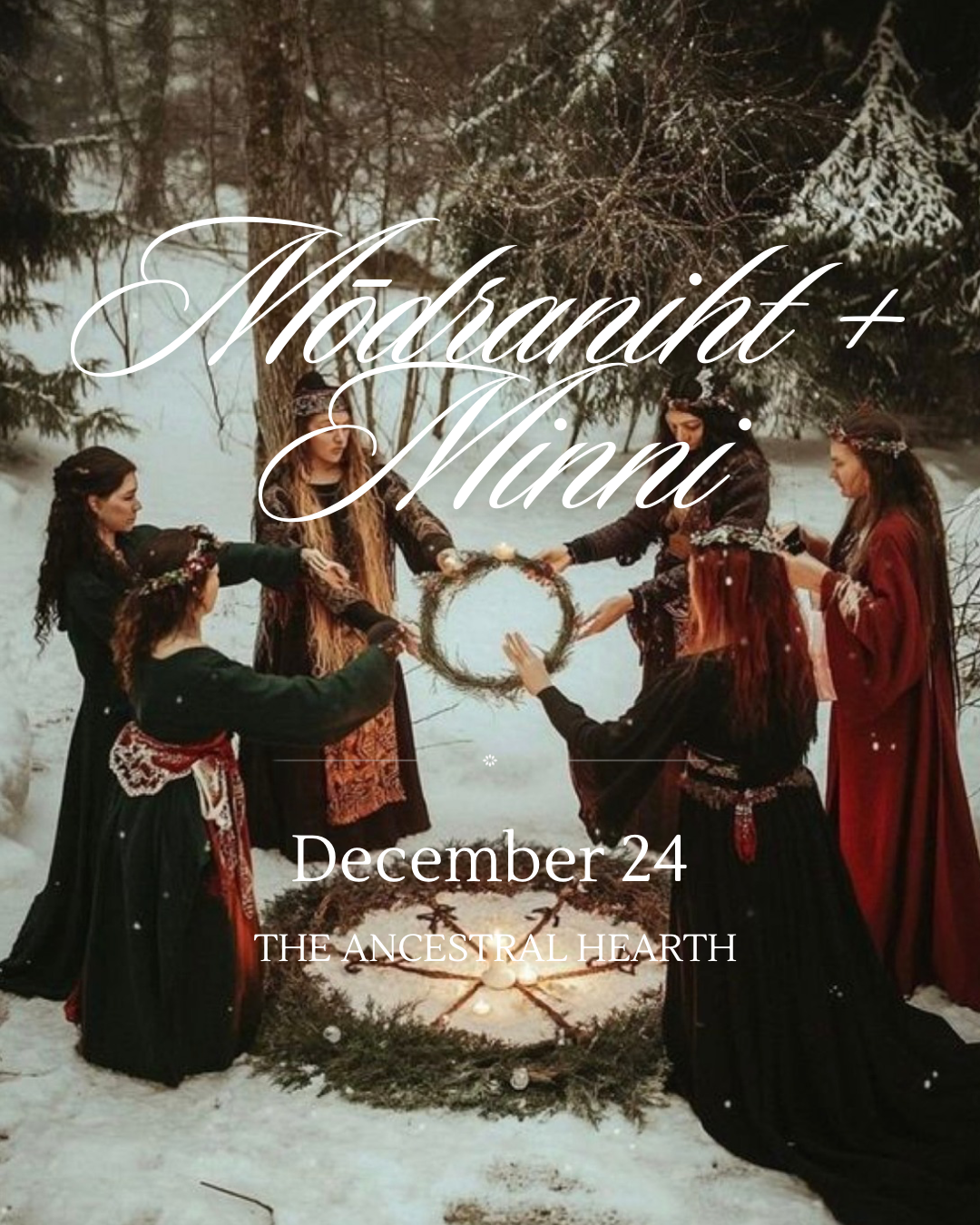
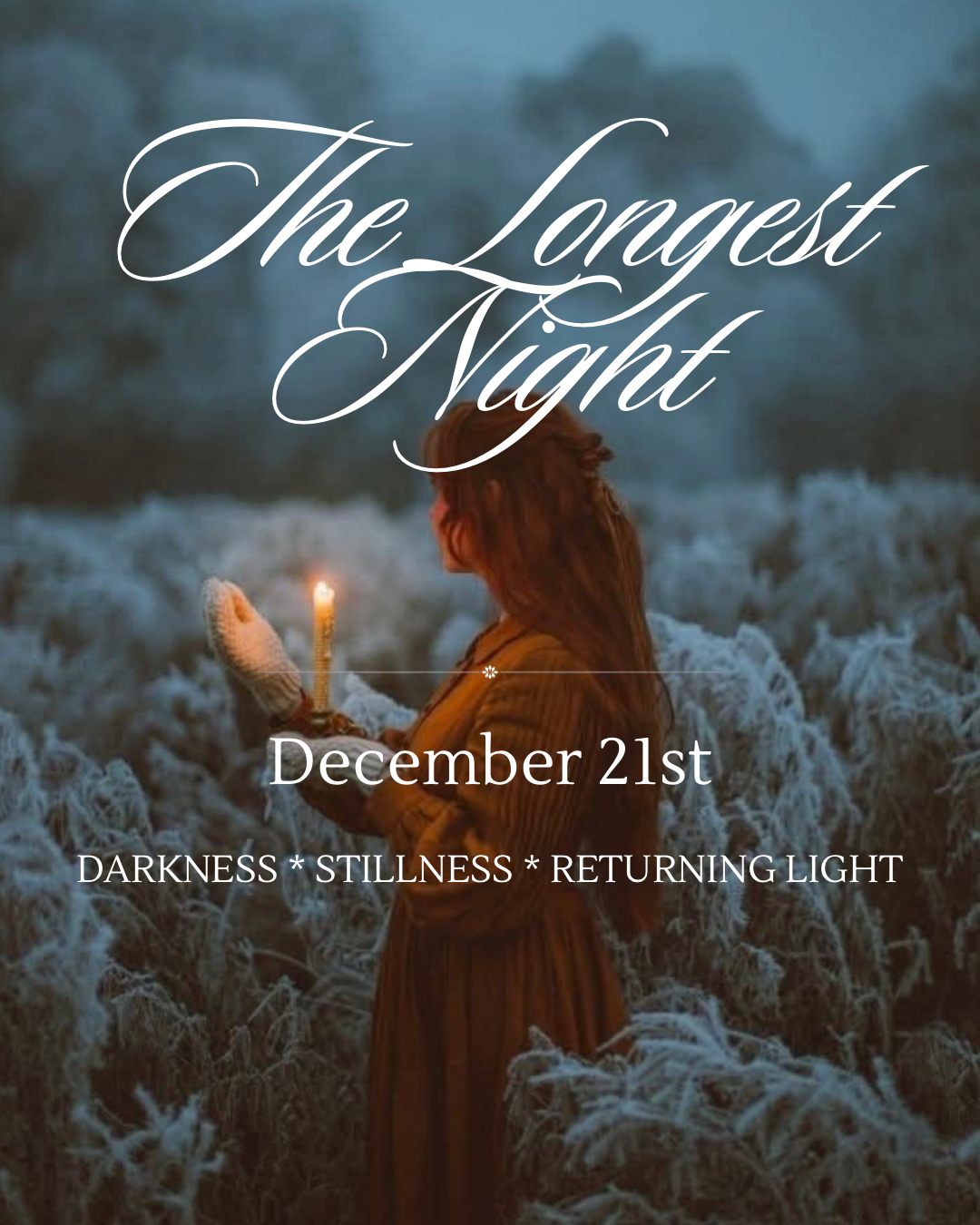
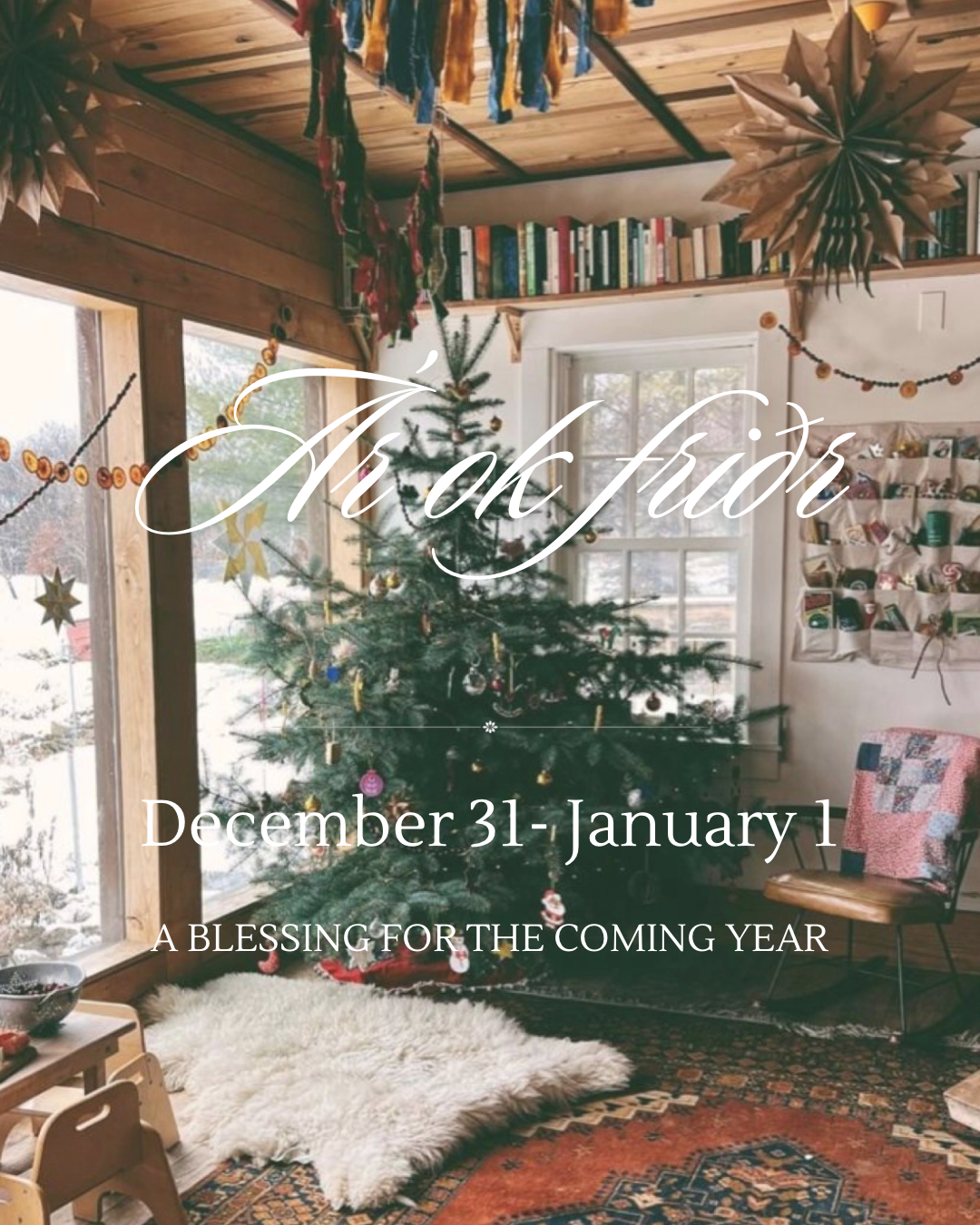
Within The Winter Traditions, you will find pieces of winter history alongside rituals and practices inspired by what those traditions awaken in me. We will tend the hearth, nourish ourselves, sit with the longest night, remember the mothers and those who came before us, and offer blessings for the year ahead.
Each tradition has a date or period of the season beside it, but please do not turn this into another schedule you need to keep up with.
Missed the date?
So what.
If it calls to you, do it anyway.
Within The Elemental Origins, we will travel further back into the old Norse creation stories, beginning with Ginnungagap—the vast void before the world had taken form—and moving through ice, fire, water, Earth, breath, the great tree and darkness.
Each element includes a little of its mythological history, the thread I have chosen to explore through it, and an embodied practice you can return to throughout the winter depending on what you need.
There may be a day when you need the stillness and possibility of Ginnungagap. Another when you need to pull inward with Niflheim, feel the warmth of Muspelheim, soften with the Thaw, feel the Earth beneath you, breathe a little deeper, remember your endurance or simply disappear into the darkness and rest.
Let the element meet you where you are.
The rituals and practices within The Old Ways of Winter are not recreations of historical practices. They are offerings created from my own heart, intuition and creative energy as I sit with these old stories and traditions and ask how we might experience their wisdom in our lives today.
More than anything, my wish for you this season is simple.
I hope you slow down. I hope you nourish yourself deeply. I hope you reconnect with your body, the land and the rhythms moving around you. I hope you honor the Mother—in the Earth, in the women who came before you and perhaps within yourself. And I hope you allow yourself to rest in a way you truly deserve.
There is nothing here you need to complete and no perfect way to walk through this journey.
Follow what calls to you. Leave what doesn't. Return when you need it.
Warm your hands by the fire. Learn a little about the old stories. Make something with your hands. Nourish your body. Sit beneath the winter sky. Remember those who came before you.
Offer yourself a little more depth, nourishment and rest this winter.
And together, we will tend to the old ways.
The Winter Traditions
The Elemental Origins
A journey through the elemental forces woven into old Norse and Germanic mythology, and a modern embodied cosmology created to help us experience these ancient energies through the body, the land and the winter season.
These are not traditional elemental practices or a historical system once followed by the Norse people. Instead, we will begin with the old stories—Ginnungagap, ice, fire, the thaw, the creation of the Earth, breath and the great tree—and follow the threads they awaken within us today.
Consider this an invitation to move beyond simply learning the mythology and into experiencing it.
To feel the stillness of the void. The preservation of ice. The warmth of fire. The softening of water. The support of Earth. The movement of breath. The endurance of the trees. The shelter of darkness.
The old stories give us the doorway.
The body gives us a way inside.
Ginnungagap
The Void • Stillness
Before there was Earth, sea or sky, there was Ginnungagap—the vast, yawning space between worlds.
In Norse creation mythology, Ginnungagap existed between the icy realm of Niflheim and the fiery realm of Muspelheim. As ice reached outward from one side and heat moved toward it from the other, the two forces eventually met within the gap. The frozen rime began to thaw, and from this meeting the first life emerged.
Ginnungagap was not an element itself, but the space in which creation became possible. It existed before the world had taken form—before mountains, oceans, trees or humankind.
The Elemental Thread
For our journey, Ginnungagap becomes the place before movement: the pause, the stillness, the space where something has not yet become something else.
Rather than rushing to fill that space, what happens when we allow ourselves to experience it?
Elemental Practice: Entering the Void Meditation
Niflheim
Ice • Preservation
In Norse creation mythology, Niflheim was a primordial realm of cold, mist and ice. From within it flowed the waters of Hvergelmir, feeding ancient rivers that moved outward toward Ginnungagap. As these waters traveled farther from their source, they froze, creating layers of ice and rime that stretched into the vast emptiness.
Eventually, the ice of Niflheim met the heat flowing from Muspelheim. The frozen rime began to melt, and from this meeting of cold and warmth, the first life began to emerge.
Ice, then, was present before the world itself had taken form. It was part of the conditions from which creation became possible.
The Elemental Thread
For our journey, ice becomes an exploration of preservation, contraction and conservation.
Winter shows us that life does not always need to be moving outward in order to remain alive. Trees become bare. Growth slows. Animals conserve their energy. Water becomes still beneath the ice.
There are seasons when our bodies ask the same of us.
Rather than seeing contraction as something we immediately need to overcome, what happens when we allow ourselves to become smaller for a moment?
What if pulling inward can sometimes be an act of preservation?
Elemental Practice: Becoming Still
Muspelheim
Fire • Sustenance
In Norse creation mythology, Muspelheim was the primordial realm of heat and fire, existing opposite the cold and mist of Niflheim. It was described as a place of intense heat and brightness, where sparks and burning embers moved outward toward the emptiness of Ginnungagap.
As the warmth of Muspelheim reached the ice and rime flowing from Niflheim, the frozen layers began to thaw. From the meeting of these opposing forces—fire and ice—the conditions for the first life were created, and Ymir began to emerge (The first living being, primordial giant and the ancestor of all jötnar - The Goddess Ran was a jötnar).
Fire was therefore present at the very beginning of creation, not simply as a force of destruction, but as part of the warmth and movement that allowed something new to come into being.
The Elemental Thread
For our journey, fire becomes an exploration of warmth, vitality and sustenance.
After the contraction of ice, fire reminds us that there is also something within us capable of creating warmth.
Our bodies generate heat. Our blood moves. Our muscles awaken through movement. And just as a hearth must be tended through the long winter, there are parts of us that need tending too.
This does not have to be a roaring fire.
Sometimes it is simply an ember.
A small source of warmth that says: I am still here.
Rather than asking ourselves to burn brighter, what happens when we simply tend what is already alive?
Elemental Practice: Tending the Inner Fire
The Thaw
Water • Softening + Movement
Water was present from the beginning of the Norse creation story. From Hvergelmir, the great spring within Niflheim, rivers flowed outward into the primordial world. As they moved farther from their source, the waters froze, creating the layers of ice and rime that stretched toward Ginnungagap.
But when the warmth of Muspelheim reached that frozen rime, something changed.
The ice began to thaw.
Drops formed, and from this meeting of frozen water and heat, life began to emerge. Later in the creation story, water appears again when Ymir's body becomes the world and his blood becomes the seas.
Water moves throughout the mythology in different forms—flowing, freezing, thawing and becoming part of the world itself.
The Elemental Thread
For our journey, water becomes an exploration of softening, movement and our capacity to change form.
Water does not remain in one state forever.
It can become still and frozen when conditions require it. It can soften when warmth returns. It can move again when the conditions around it change.
Perhaps we are not so different.
There are times when becoming still protects us, and there are times when we begin to feel something inside of us loosen again. We don't have to force that transition. The thaw can begin slowly.
A breath.
A small movement.
A little more space than there was before.
What happens when we allow ourselves to soften rather than demand that we immediately begin flowing again?
Elemental Practice: The Thaw
Ymir
Earth • Being Held
With Ymir, we begin to move from the primordial forces of creation into the formation of the physical world itself.
In Norse creation mythology, Ymir was the primordial being who emerged when the ice of Niflheim met the heat of Muspelheim within Ginnungagap. From Ymir came the first generation of jötnar, and eventually, his body became the material from which the world itself was formed.
According to the old stories, Ymir's flesh became the Earth, his blood became the seas, his bones became the mountains and stones, and his skull was raised to form the sky. Even the landscape was imagined through the language of the body.
Here, the creation story begins to take physical form. What began as vast emptiness, ice, fire and thaw becomes land beneath the feet, mountains, water and sky.
The world as we know it begins to emerge.
The Elemental Thread
For our journey, Earth becomes an exploration of support, weight and being held.
There is something beautiful about a creation story that imagines the physical world as a body.
Bone becomes mountain.
Flesh becomes land.
Blood becomes water.
And perhaps it gives us another way to experience our own bodies as part of the physical world rather than separate from it.
We spend so much of our lives holding ourselves up, holding things together and carrying what needs to be carried.
But beneath us, there is always something carrying our weight too.
What happens when we stop trying to hold ourselves up for a moment and notice what is already holding us?
Elemental Practice: Being Held
Önd
Breath • Animation
With the physical world now formed, the Norse creation story begins to turn toward life within it.
In the Völuspá, the gods come upon Ask and Embla, the first two humans, and find them without the qualities that make them fully alive. They are given several gifts, one of which is önd—a word often translated as breath or spirit.
Breath becomes part of the moment when something that already has form becomes animated with life.
There is something beautifully simple about that image. The Earth has taken shape. There are seas, mountains and sky. And now, within that physical world, there is breath.
Life begins to move through the body.
The Elemental Thread
For our journey, breath becomes an exploration of animation, movement and the invisible forces that move through us.
We cannot hold breath in our hands or see it moving through our lungs, and yet we know it is there.
The body expands. The ribs open. The chest rises and falls. Air enters us, becomes part of us and leaves again.
And most of the time, all of this happens without us asking it to.
Perhaps there is something here about allowing ourselves to receive life rather than always trying to create it.
To notice what is already moving through us. To feel the body expand and soften with each breath. And to remember that even in stillness, life is moving.
What happens when we stop controlling the breath and simply allow ourselves to be breathed?
Elemental Practice: The Breath of Life
Yggdrasill
The Tree • Endurance
As the Norse cosmos takes shape, we encounter Yggdrasill—the great World Tree that stands at the center of the mythological landscape.
Described as a mighty ash whose branches stretch across the heavens and whose roots reach deep into the worlds below, Yggdrasill connects different realms of existence. Gods gather beneath it, beings live within and around it, and its roots reach toward ancient wells and places of wisdom.
But Yggdrasill is not untouched by the world around it. Creatures feed upon it, its roots are affected by decay, and still the tree remains. It is continually tended and nourished as life carries on around and through it.
The image of the World Tree gives us a cosmos that is not simply built, but living, connected and continually being sustained.
The Elemental Thread
For our journey, the tree becomes an exploration of endurance, connection and remaining alive through changing seasons.
Here in the winter landscape, trees offer us something we can experience with our own eyes.
Some become completely bare, pulling their energy inward until conditions change. Others remain green through the cold, carrying visible life through a season when much of the landscape appears dormant.
Neither is resisting winter.
They are simply meeting it in different ways.
Perhaps endurance does not mean remaining unchanged. Perhaps it means knowing how to bend, conserve, receive nourishment and continue living through the season we are actually in.
Like a tree moving in the winter wind, we can be rooted without becoming rigid. What happens when we allow stability and movement to exist together?
Elemental Practice: Standing Like the Tree
Darkness
Darkness • Shelter + Rest
Darkness is woven throughout the Norse creation story from its earliest moments.
Before the world had taken its familiar form, there was no ordered movement of the sun and moon across the sky. The primordial landscape held places of mist, shadow and cold alongside the brightness and heat of Muspelheim. Only as the cosmos continued to take shape were the sun, moon and stars given their places, bringing rhythm to light and darkness.
And with that rhythm came something deeply familiar to the people living in the far North: seasons in which darkness itself became a powerful presence.
Winter brought long nights, shortened days and a natural turning toward fire, shelter and the warmth of the hearth.
Darkness was not simply something waiting for light.
It was part of the rhythm of the world.
The Elemental Thread
For our journey, darkness becomes an exploration of shelter, rest and the places where we are allowed to disappear for a while.
So much of our modern lives asks us to remain visible.
To produce. To respond. To keep moving. To know what comes next.
But the winter landscape does not ask this of itself.
There are hours when the land disappears beneath the night. There are seeds resting beneath the soil. There are animals tucked into dens and trees standing quietly beneath a darkened sky.
Life continues without needing to be seen.
Perhaps darkness can offer us the same permission.
Not everything needs to be illuminated. Not everything needs to be understood. Not every quiet season needs to become something productive.
Sometimes we simply need somewhere to rest. What happens when we allow the darkness to hold us rather than immediately searching for the light?
Elemental Practice: Resting in the Dark