

The Longest Night
December 21 | Winter Solstice
Darkness · Stillness · Returning Light
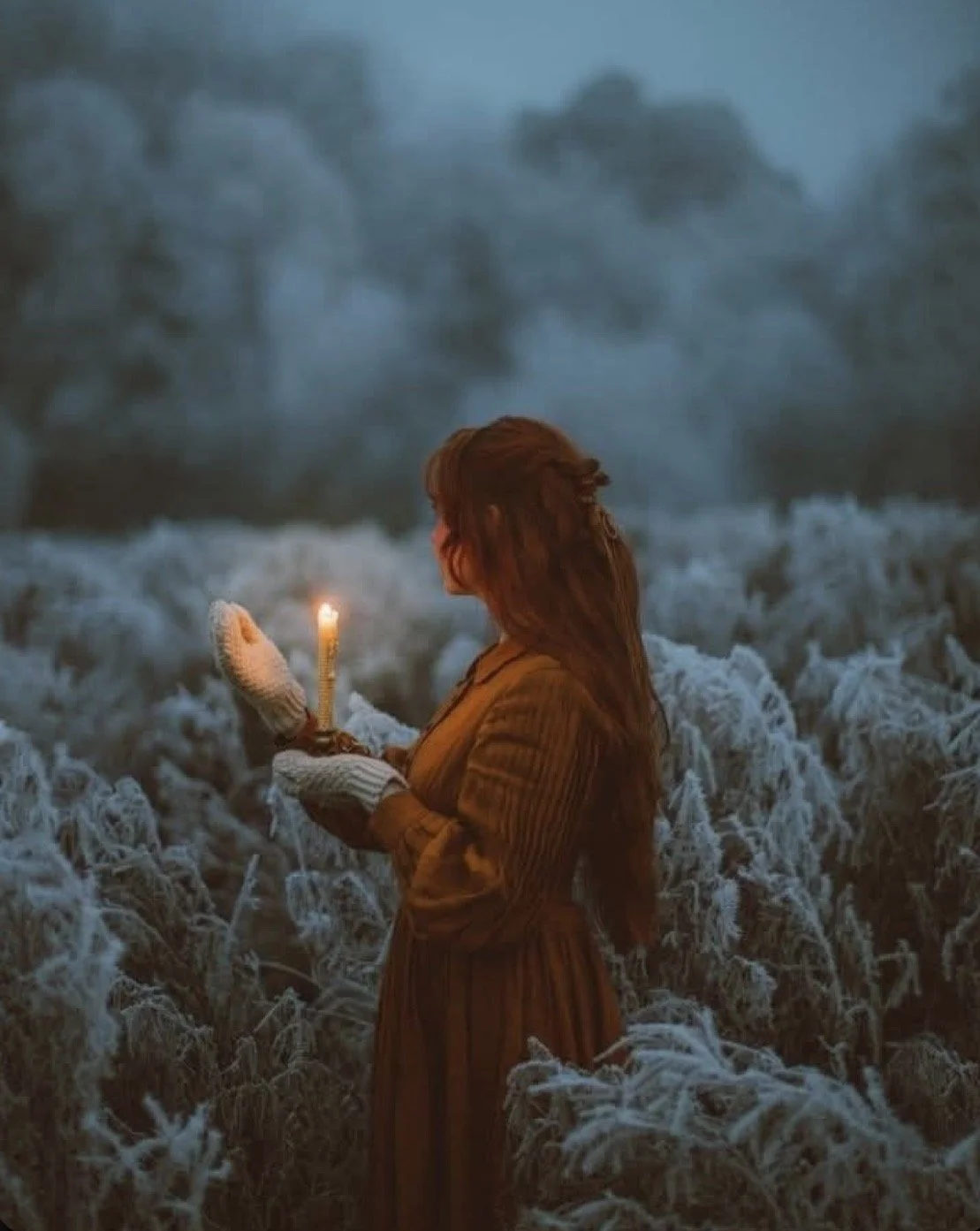
There comes a moment in the turning of the year when the darkness reaches its fullness. The nights have grown longer, the earth has quieted, and we arrive at the winter solstice, the longest night of the year.
For the ancestral peoples of Northern Europe, the changing relationship between darkness and light was intimately woven into daily life. Winter was not simply a change in temperature but a change in how life was lived. The natural world called for a different rhythm, one that required people to turn inward, conserve their resources and find warmth and sustenance within their homes and communities.
Although the customs surrounding midwinter varied across Germanic cultures, the turning of the sun marked a significant moment within the natural cycle of the year.
Today, we often celebrate the winter solstice by welcoming the return of the light, but I wonder what we might discover if we gave ourselves permission to experience the darkness before celebrating its departure.
What is it about the darkness that makes us so eager for the light to return? And what might we learn about ourselves if, for just a little while, we stopped trying to find our way out of it?
Nótt & Skaði — Inhabiting the Darkness
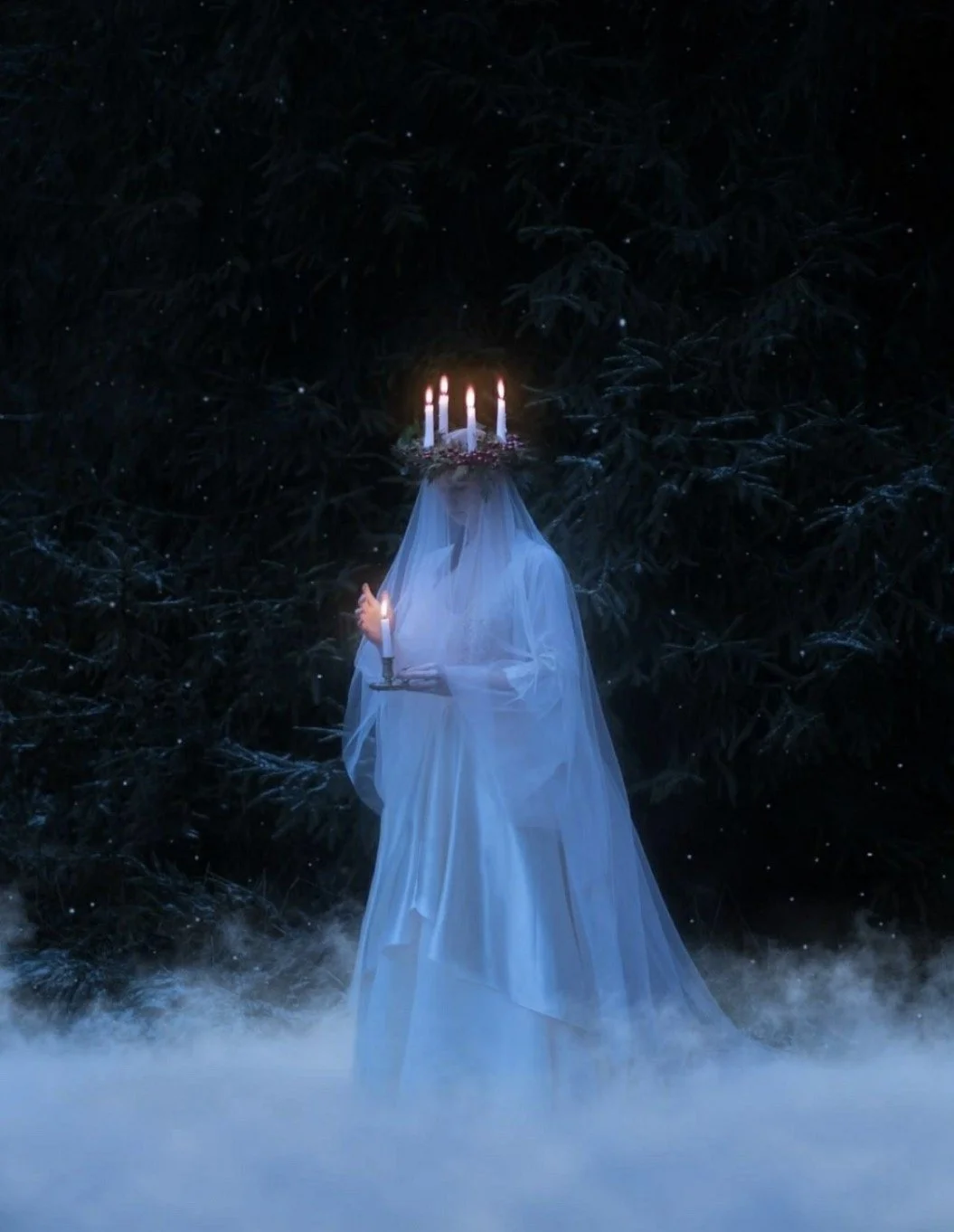
Within Norse mythology, we meet Nótt, the personification of night. Riding across the heavens upon her horse Hrímfaxi, she moves through the natural rhythms of darkness and light. What I find particularly beautiful about her mythology is that she is the mother of both Jörð, the personification of Earth, and Dagr, the personification of Day.
There is something profound about darkness being the mother of light. We often associate darkness with the absence of something, yet within Nótt's mythology, we are offered an entirely different perspective. Darkness can be a place of creation, even when we cannot witness what is being created.
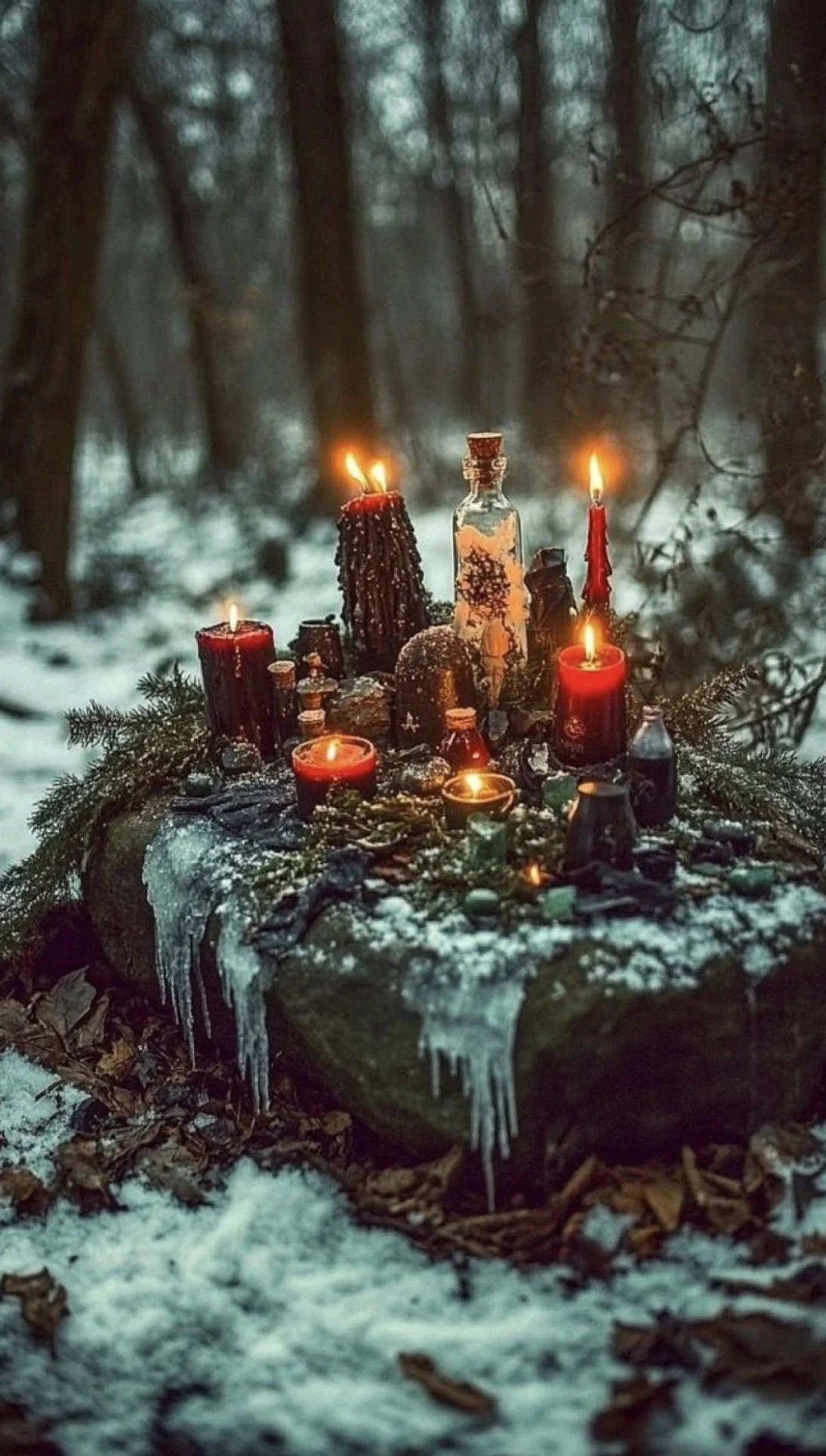
Alongside Nótt, we meet Skaði, a Goddess of the mountains, winter and wilderness. In her mythology, Skaði marries Njörðr, a God deeply connected to the sea. Although they attempt to share their lives within each other's environments, neither finds comfort within the landscape the other loves. Skaði eventually returns to the mountains, where she feels most at home.
What fascinates me about Skaði is that the very environment many would find uncomfortable is the environment in which she thrives. She does not need the snow to melt or the warmth to return in order to fully inhabit her own nature.
Through these two Goddesses, we are invited to explore our relationship with the darkness and the seasons of our own lives. Nótt reminds us that the light will re-emerge without our interference, while Skaði invites us to discover how we might fully inhabit the season before it changes.
How much of our lives do we spend anticipating what comes next rather than allowing ourselves to be fully embraced by what is here?
Perhaps on this longest night, we can give ourselves permission to stop searching for the light and allow the darkness to hold us for a little while.
Voice note — Nótt Doing Anything
The art of existing without an agenda.
I think this voice note could be such a fun yet profound conversation. We can bring in both mythologies and then explore our rather complicated relationship with doing absolutely nothing.
Some threads for you to riff on:
Our obsession with the light. Why are we so uncomfortable with darkness, uncertainty and periods of inactivity?
The productivity of spirituality. Have we turned our healing journeys into another form of hustle? Are we constantly trying to fix, release, clear or transform something?
Nótt as the mother of Day. Can we trust that something can emerge without our conscious participation?
Skaði and inhabiting our environment. What if we stopped making our enjoyment of life conditional upon our circumstances changing?
Rest without a return on investment. Can we allow ourselves to do nothing without justifying it as preparation for doing something else?
The Art of Doing Nothing
A ritual for the longest night
On this longest night of the year, we are going to honor the darkness rather than anticipate the return of the light. Through the wisdom of Nótt and Skaði, we are invited to fully inhabit the season we are in without feeling the need to change it.
What you will need:
An unlit candle
A warm blanket
A quiet, comfortable space
On the evening of the winter solstice, find a comfortable place where you can spend some uninterrupted time with yourself. Turn off the lights, place your phone out of reach and allow yourself to settle into the darkness.
For the next ten to fifteen minutes, give yourself permission to do absolutely nothing.
There is no intention to set, no meditation to follow and no question you need to find the answer to. You do not need to quiet your mind, release anything or reach a particular state of awareness. Allow yourself to be fully embraced by the night without placing any expectations upon the experience.
You may notice how quickly your mind searches for something to occupy itself with. Perhaps you begin thinking about what you could be accomplishing with this time, or even questioning whether you are doing this practice correctly. Be curious about what arises without feeling the need to do anything with it.
Remember Skaði and her ability to find comfort within the very environment that others might wish to escape. Can you allow yourself to inhabit the darkness rather than simply wait for it to pass?
If the darkness feels overwhelming, you are welcome to allow a little ambient light into your space. This is not a practice of endurance, but an invitation to be present with yourself.
As you bring your time in the darkness to a close, you may wish to speak these words:
I do not need to fear the darkness.
I do not need to rush the light.
I trust the turning.
You may choose to leave your candle unlit for the remainder of the evening, allowing the night to be honored in its fullness. The following morning, you can light your candle in reverence of the returning light.
Just as Nótt gives birth to Dagr within Norse mythology, we are reminded that the emergence of light does not always require our intervention. There are rhythms of life that continue without our participation, and perhaps there is comfort in remembering that we do not have to be responsible for every unfolding.
After all, we are not responsible for making the sun rise.
To Carry With You
As you remember the women who came before you, remember to honor the woman who is here now. You can carry their wisdom, celebrate their strength and cherish their memories without believing you must endure the same hardships or sacrifice yourself in the same ways.
Allow the sacred to find its way into the ordinary moments of your life, and give yourself permission to honor your own changing rhythms. Perhaps the freedom you give yourself today will become the very thing another woman within your lineage remembers you for.